

Opening Night · NBA 2026-27
The 2026-27 NBA season begins at three o'clock in the afternoon, in Detroit, in daylight. It is the earliest tip-off of the new season and the first basketball anyone will see that counts. Boston Celtics at Detroit Pistons, Tuesday, Oct. 20 — before the Knicks raise a banner at seven, before a conference finals rematch closes the night at 9:30. Three hours of afternoon basketball in October is not a tradition. It is a choice, and it is worth asking why the league put these two teams in it.
What makes Celtics vs. Pistons an intriguing opening-night matchup?
Three things. It is the first game of the 2026-27 season and the only afternoon tip-off on the opening slate. It pairs two franchises that have been playing each other since 1948 and have met in eight playoff series. And it sets two rosters that were rebuilt in opposite directions against each other: Boston traded Jaylen Brown and handed the team back to Jayson Tatum; Detroit kept a 60-win core and added veterans around it. It is also the cleanest uniform contrast in the league — a franchise whose jersey has barely moved in seventy years, against one that has reinvented its look five times.
The season opens with a matinee
Afternoon basketball is usually a holiday thing. This one is a Tuesday in October.
The NBA's 81st regular season starts at 3 p.m. ET at Little Caesars Arena, on NBC and Peacock. Daytime tips belong to Christmas Day and Martin Luther King Jr. Day, when the league wants a long runway and family viewing. Putting one on a Tuesday afternoon in October is a scheduling decision rather than a custom — and a smart one. The opening slate has three games on one network, and the 3 p.m. window means none of them overlap. New York raises its first banner in 53 years at 7. Oklahoma City and San Antonio replay a conference finals that went seven at 9:30. Boston and Detroit get the wide national window all to themselves, at an hour when no other basketball exists.
There is a basketball reason too. Both of these teams ended last season the same way — with a Game 7 loss — and they ended it very differently.
Boston's was the worse kind. The Celtics led Philadelphia 3-1 in the first round and lost three straight, a collapse that arrived at the end of a season in which they had already lost Jayson Tatum for all but the final weeks. Detroit's Game 7 defeat, a 31-point loss in Cleveland, came at the end of the most promising month the franchise had produced in nearly two decades. One team spent the summer taking itself apart. The other spent it adding around what it already had.
The oldest argument in the league
Two franchises that were arguing before most of the NBA existed.
The first Celtics–Pistons game was played on Nov. 12, 1948, and Boston won it 84-75. The Pistons were not in Detroit yet; they were the Fort Wayne Zollner Pistons, named for a piston manufacturer, and they did not move to Detroit until 1957. They have now met 446 times, with Boston ahead 281-165, and the two franchises have been in the same conference since 1978. Their first playoff meeting came in 1968, a 4-2 Boston win on the way to a title.
What makes this pairing unusual is that its intensity has never depended on both teams being good at the same time. It runs in bursts, roughly a decade apart, and each burst produced something that stuck.
1987, and everything it set off
The series that turned a matchup into a rivalry, and a rivalry into a decade.
Boston beat Detroit in six games in the 1985 conference semifinals. By 1987 the Pistons were no longer the younger team in the series — they were a finished product, built on contact, and they took the Celtics to the edge.
Game 5, May 26, 1987
Game 5 at the Boston Garden is the moment the rivalry became permanent. Boston trailed by a point with seconds left and Detroit had the ball. Isiah Thomas, waiving off a timeout, looked toward Bill Laimbeer on the inbound. Larry Bird read it, stepped into the passing lane, stole the ball while somehow staying in bounds, and found Dennis Johnson for a layup with one second left. Boston 108, Detroit 107. Longtime Celtics announcer Johnny Most's call of the play — "now there's a steal by Bird, underneath to DEE-Jay, he lays it in" — is still the shorthand for it. Detroit forced Game 7 and lost it, 117-114.
The nickname, and the response
The phrase that outlived all of them arrived that same season. At the start of 1987-88, Al Davis of the then-Los Angeles Raiders sent Pistons merchandise to Detroit to salute a shared approach to the game; sportswriters picked up the name, and when the NBA released its end-of-season video yearbook, the title was simply Bad Boys. Joe Dumars later explained the whole project in one line: "You can't be great in this league and have zero identity."
Then Detroit got even, and then some. The Pistons won the 1988 conference finals 4-2 for their first Finals trip, swept Boston 3-0 in the opening round of 1989 on the way to a first championship, and beat them again 4-2 in 1991. Boston answered in 2002, a 4-1 semifinal win built on Paul Pierce and Antoine Walker. And the last chapter came in 2008 — a 4-2 Boston win in the conference finals, on the way to a championship.
Which brings the history directly to this game. Spring 2008 was the last time Detroit won a playoff series — and the team that ended their season that same May was Boston. It has taken Detroit eighteen years to win another one.
Every time they have met in the playoffs
| Season | Round | Result |
|---|---|---|
| 1968 | Eastern Division semifinals | Boston 4-2 |
| 1985 | Eastern Conference semifinals | Boston 4-2 |
| 1987 | Eastern Conference finals | Boston 4-3 |
| 1988 | Eastern Conference finals | Detroit 4-2 |
| 1989 | Eastern Conference first round | Detroit 3-0 |
| 1991 | Eastern Conference semifinals | Detroit 4-2 |
| 2002 | Eastern Conference semifinals | Boston 4-1 |
| 2008 | Eastern Conference finals | Boston 4-2 |
Two ways to design a uniform
One franchise treats its jersey as a monument. The other treats it as a costume it is allowed to change.
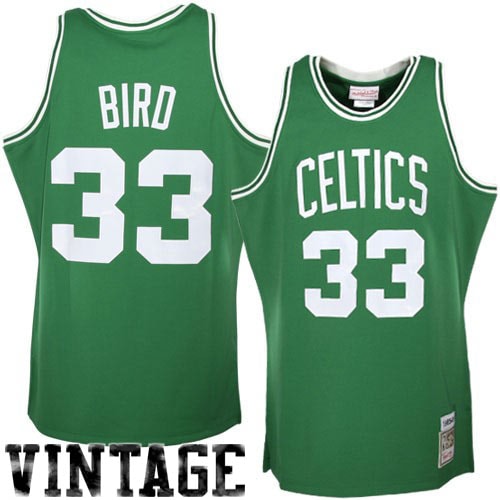
Boston's kelly green is one of the most stable visual identities in professional sport. The wordmark has been redrawn, the trim has tightened, the fabric has changed completely — but the colour and the idea have not moved in seventy years. That continuity is the product. A 1985 Bird jersey and a 2026 Tatum jersey are recognisably the same statement, and the alternates the team wears — a black Statement, a white City Edition — read as exceptions to a rule that nobody has seriously questioned.
Detroit has done the opposite, and repeatedly. After the move to Detroit in 1957 the Pistons wore blue block lettering for two decades. They spent 1978-79 experimenting with lightning bolts, went back to a cleaner block look in 1981 and kept it until 1996. Then came the most divisive redesign in franchise history: teal, black, yellow and red, with a flaming horse's head replacing the basketball. That ran from 1996 to 2001, when the team returned to red, white and blue. In August 2013 the Pistons unveiled a navy alternate with "Motor City" across the chest — and its first appearance on a court, on Nov. 3, 2013, was against Boston.
Five identities in seventy years, against one that never left. That is why the two teams' throwback racks feel completely different. A Boston throwback restores a slightly older version of something still in use; a Detroit throwback restores a version the franchise deliberately walked away from — which is exactly why the teal era, unpopular when it happened, is now the most requested look the Pistons have ever worn.
Shop by category
What Boston changed this summer
A five-time All-Star out, a 36-year-old wing in, and the ball back with Tatum.
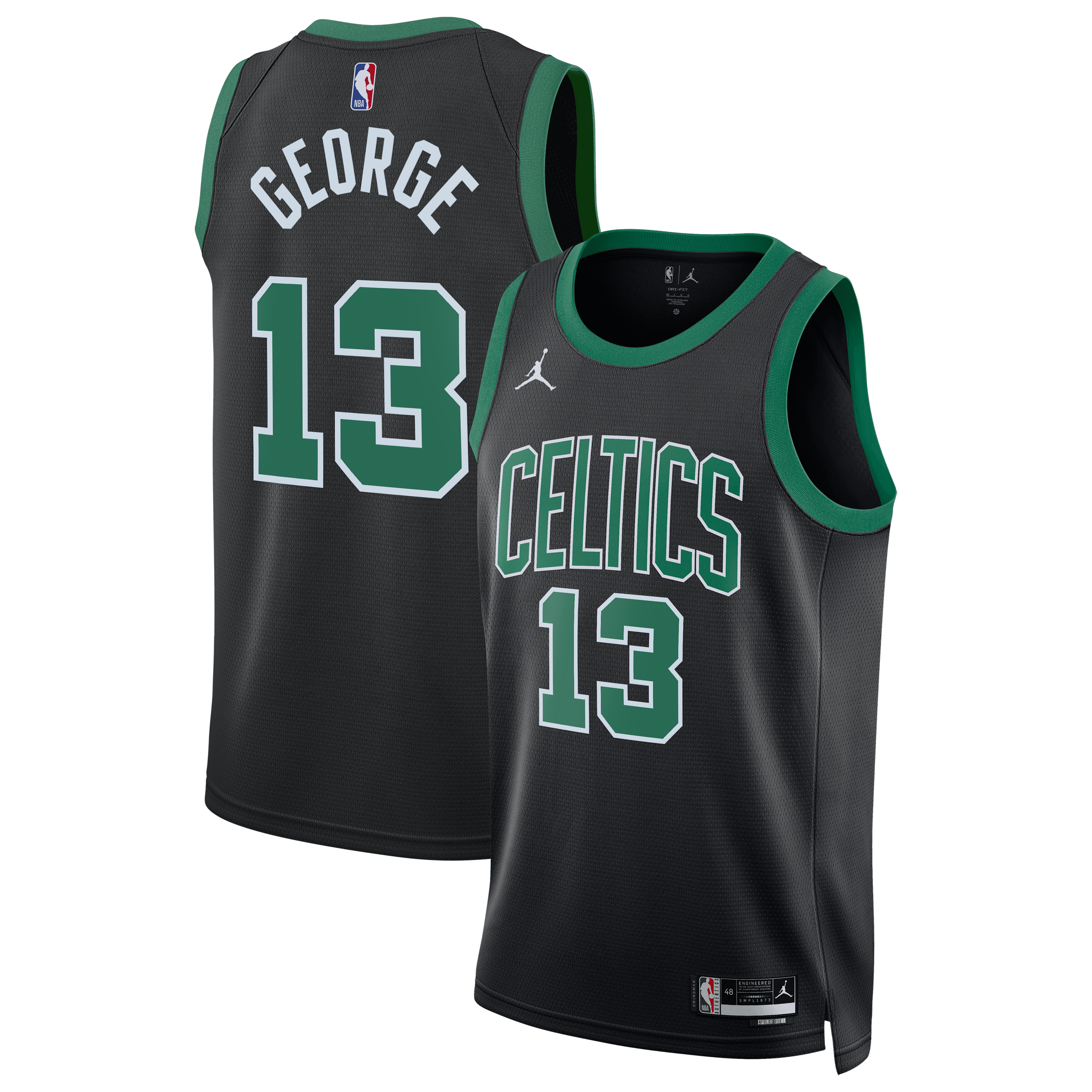
The Celtics traded Jaylen Brown to Philadelphia in early July for Paul George, two first-round picks and two second-round picks. Brown was coming off the best season of his ten-year career — a career-high 28.7 points per game — and Boston's front office decided the roster needed to be reshaped around Tatum rather than alongside him.
This is Tatum's first full season since his Achilles injury, and for the first time in a decade he will be the unambiguous No. 1 option in a Celtics jersey. George, who turned 36 in May, played only 37 games for Philadelphia last season and averaged 17.3 points; on his best nights he is still a two-way wing, and Boston's season probably depends on how many of those nights exist. Mitchell Robinson arrived from the Knicks on a three-year deal after winning a championship, giving Boston an elite rebounder and rim protector. Mike Conley signed on for a 20th season as backcourt cover.
Who inherits the touches
The two players who inherit the most are already in the building. Payton Pritchard averaged 17.0 points and 5.2 assists and shot 37.7 percent from three last season; with Brown gone, the touches go up, and so does the attention he will see. Derrick White becomes the second option on many nights. Nikola Vučević, Dalano Banton and Max Shulga are gone; Sam Hauser, Baylor Scheierman, Hugo González and Jordan Walsh move up a rung.
There is a neat historical echo. The last time Boston built a champion out of a group of established veterans around a homegrown star, in 2008, the path went through Detroit — and that roster ended Detroit's run. Eighteen years later the Celtics have made a similar bet with an older wing, and the first team they will see is the same one.
Celtics jerseys in the store
Every card links to the product page, where you choose the fit and the size.




What Detroit kept
Sixty wins, a No. 1 seed, and a first playoff series win in eighteen years.
Detroit did not chase a headline this summer. The Pistons won 60 games and the top seed in the East, then produced the most valuable month of basketball the franchise had played since 2008: down 3-1 to Orlando in the first round, they won three straight, becoming the 15th team in league history to come back from that deficit and winning a playoff series for the first time in eighteen years. They then pushed Cleveland to a Game 7 in the semifinals and lost it badly, by 31.
Cunningham's leap
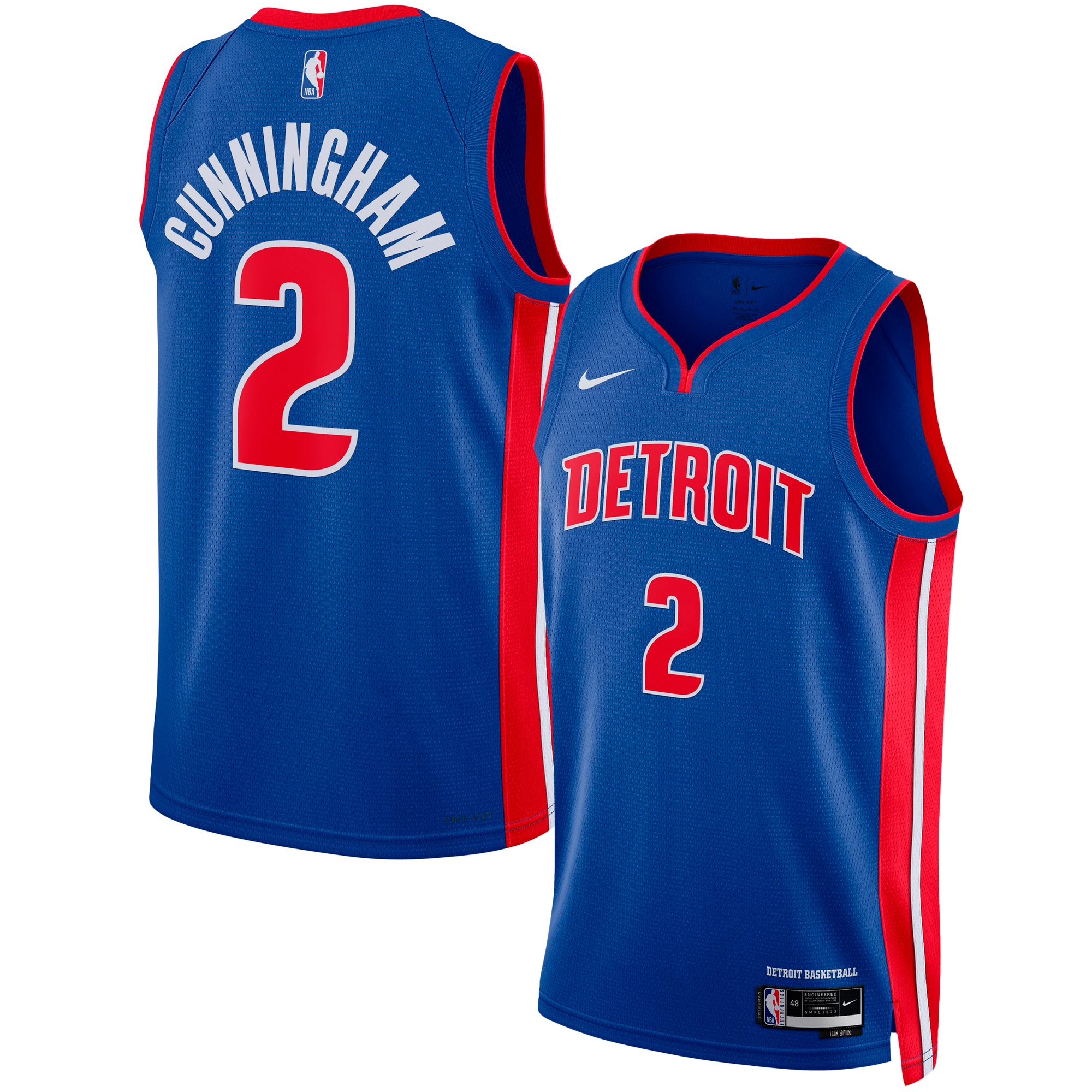
The reason to believe the regular season was real is Cade Cunningham. He averaged 23.9 points and 9.9 assists across the season, then raised his level in the Orlando series to 32.4 points a game, including 45 in the do-or-die Game 5. In doing so he joined a short list of players to total 225-plus points and 50-plus assists in a single playoff series — Giannis Antetokounmpo, Luka Dončić and LeBron James are among the others. He wears No. 2, and it is now the number most associated with Detroit basketball.
The players around him
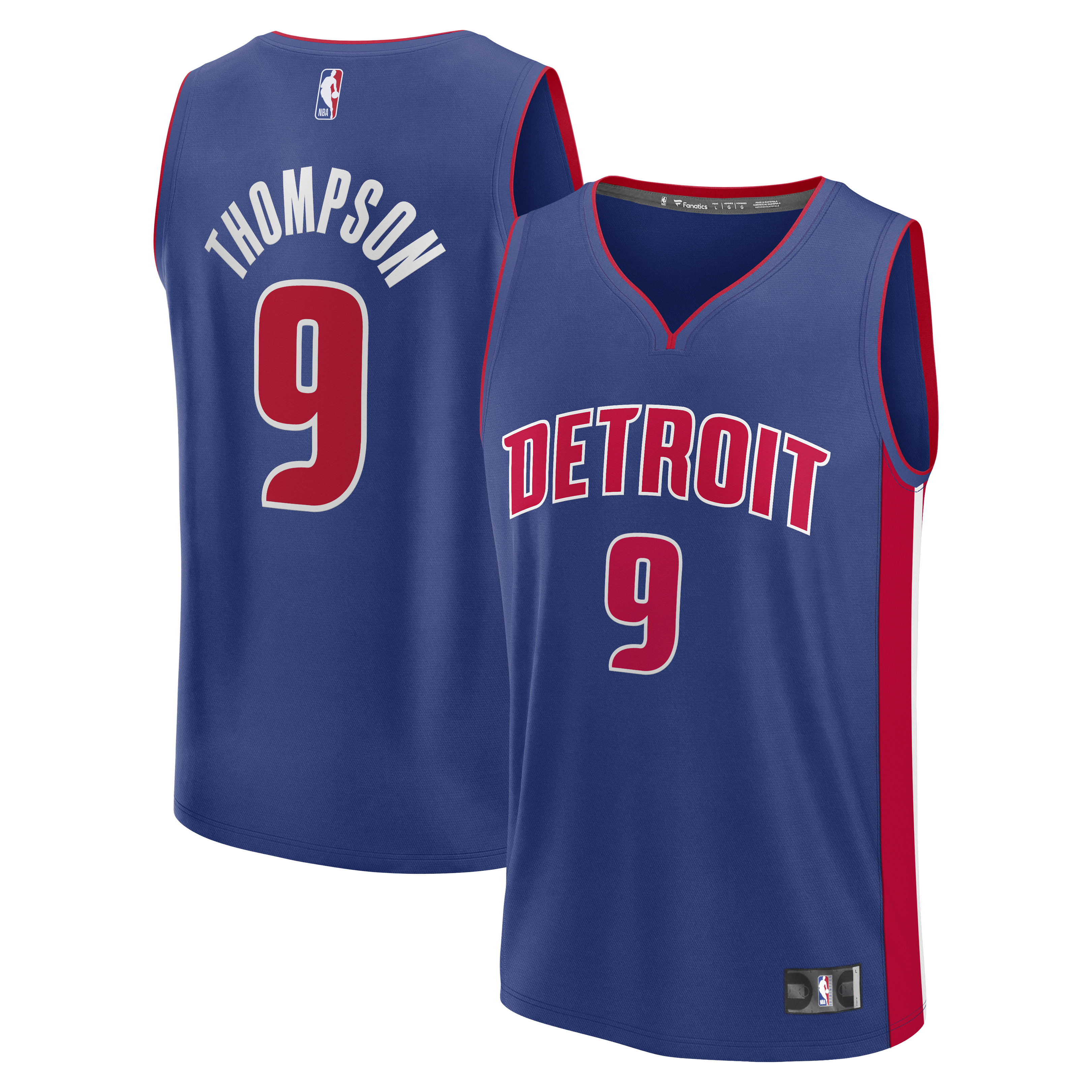
Around him the roster is unusually well balanced for a team this young. Ausar Thompson averaged 2.0 steals a game and has become one of the league's most disruptive perimeter defenders, the kind who takes the other team's best player and makes the night difficult. Jalen Duren, an All-Star centre, averaged 10.6 rebounds and gives Detroit the interior presence that makes the perimeter pressure affordable; his next contract is still unresolved. Jaden Ivey remains the third guard in a backcourt that no longer has to be carried by Cunningham alone.
The additions were deliberately unglamorous: John Collins, Gary Harris, Isaiah Joe and Taurean Prince, plus rookies Ebuka Okorie and Ugonyo Onyenso, with Kevin Huerter re-signed and Javonte Green extended. Tobias Harris left for San Antonio, and Caris LeVert, Marcus Sasser and Isaiah Stewart were moved. Detroit had the room and the pitch to pursue LeBron James and did not; Cunningham said he never made the call, believing James would go where he wanted. That is continuity as a strategy — the exact opposite of what Boston chose.
Pistons jerseys in the store
Every card links to the product page, where you choose the fit and the size.



The numbers on the back
Two digits that will define the next five years of this matchup.
Tatum wears 0. Cunningham wears 2. It is worth noticing how much those two digits now carry, because the rest of the uniform around them is going to keep changing. Tatum's 0 has been in Boston since 2017 and will outlast several rosters. Cunningham's 2 is the number Detroit fans bought in the years when the team was losing 60 games, which is the version of a jersey that means the most later.
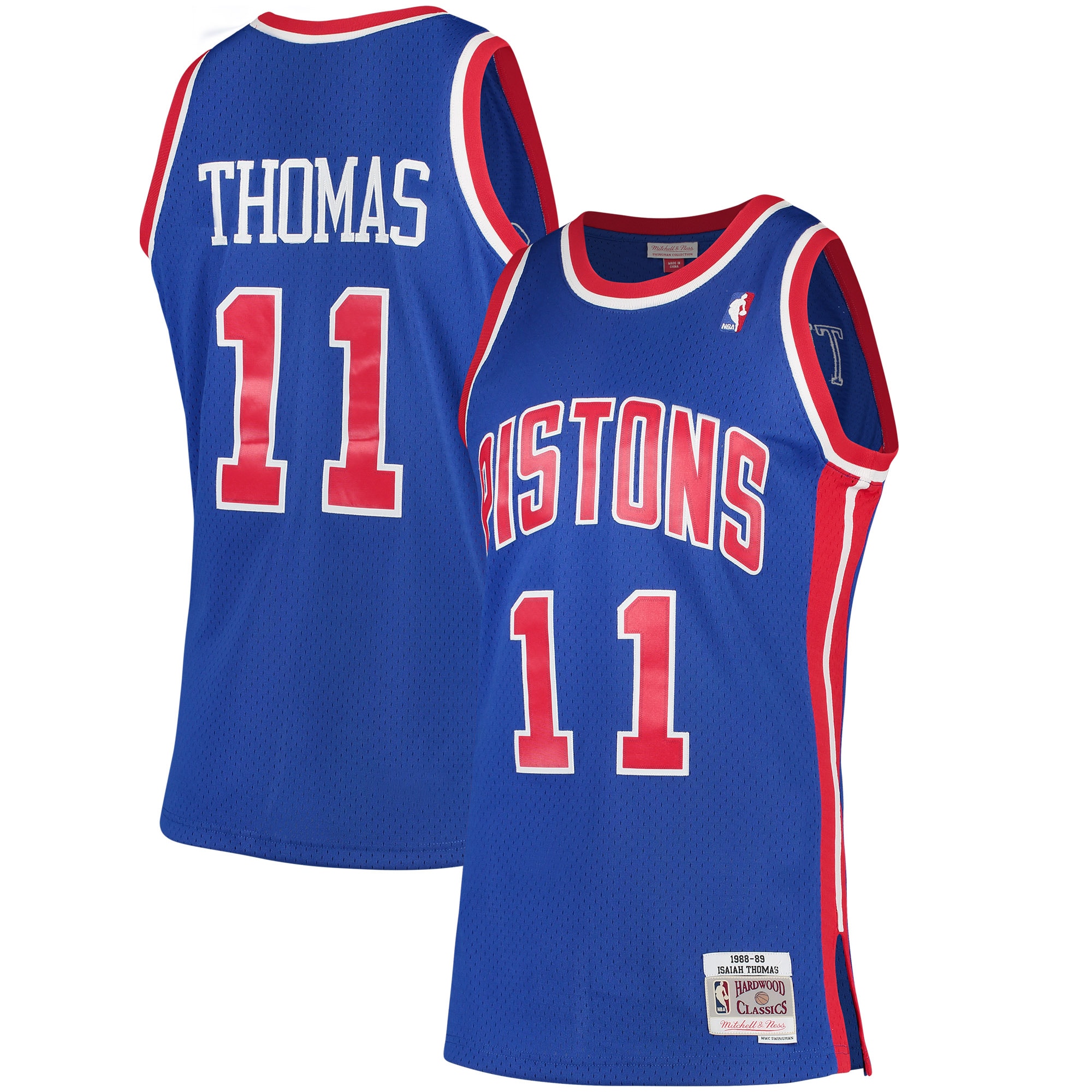
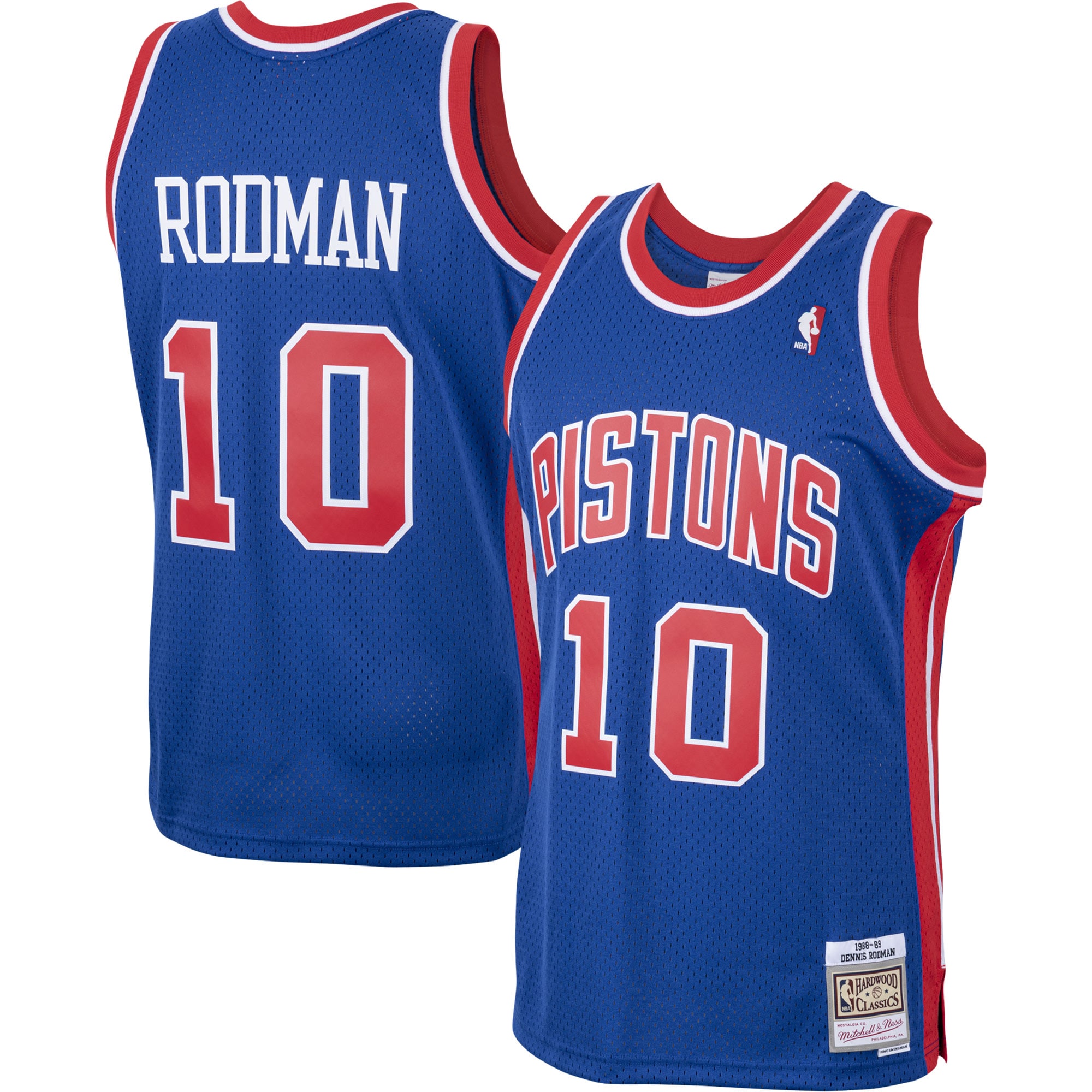
The history of this matchup is unusually well documented in numbers. Isiah Thomas wore 11 through both Pistons championships; Dennis Rodman wore 10 in Detroit before he became 91 in Chicago — the same player, a different identity, decided entirely by the uniform. Larry Bird wore 33 and Paul Pierce wore 34, and both remain among the most reproduced Celtics jerseys in circulation. A number is the cheapest form of identity in sport and the most durable one: teammates change, arenas change, designs change, and the digit stays.
What to watch on Oct. 20
Five things that will still be true in April.
- Boston's first twelve minutes without Brown. A decade of half-court offence was built on two wings who could both create. That is now one wing and a question.
- Whether Detroit's regular season travels. Sixty wins and a No. 1 seed are not flukes, but the Pistons have to prove the version of them that lost Game 7 by 31 is not the real one.
- Tatum against Ausar Thompson. The best available test of whether Detroit's perimeter defence can hold up against a genuine No. 1 option.
- Cunningham's next step. He was the best player in a first-round series. The next question is whether he is the best player in a conference finals.
- The uniforms themselves. Boston will wear green. Detroit will wear blue. It has looked that way, in some form, since 1948 — and it is the longest-running visual argument in the league.
Frequently asked questions
When do the Celtics and Pistons play on opening night?
Tuesday, Oct. 20, 2026, at 3 p.m. ET at Little Caesars Arena in Detroit, on NBC and Peacock. It is the first game of the 2026-27 NBA season and the earliest tip-off on the opening slate. Philadelphia at New York (7 p.m. ET) and Oklahoma City at San Antonio (9:30 p.m. ET) follow.
How many times have the Celtics and Pistons met in the playoffs?
Eight series, most recently the 2008 Eastern Conference finals, won by Boston 4-2. Boston has won five of the eight (1968, 1985, 1987, 2002, 2008) and Detroit three (1988, 1989, 1991). Across 45 postseason games, Boston leads 24-21.
Who leads the all-time series between the Celtics and Pistons?
Boston leads 281-165 in 446 meetings. The first game was played on Nov. 12, 1948, when the Celtics beat the Fort Wayne Zollner Pistons 84-75, nine years before the franchise moved to Detroit.
What was the most famous Celtics–Pistons game?
Game 5 of the 1987 Eastern Conference finals, on May 26 at the Boston Garden. With Boston trailing by one and seconds left, Larry Bird stole Isiah Thomas's inbound pass, stayed in bounds and passed to Dennis Johnson for a layup with one second remaining to win 108-107. Boston took the series in seven games, 117-114 in the finale.
What changed for the two teams in the 2026 offseason?
Boston traded Jaylen Brown to Philadelphia for Paul George and four draft picks, and added Mitchell Robinson and Mike Conley, with Jayson Tatum returning for his first full season since an Achilles injury. Detroit kept a 60-win core around Cade Cunningham and Jalen Duren and added veterans John Collins, Gary Harris, Isaiah Joe and Taurean Prince.
A rivalry that runs on uniforms
Most rivalries need both teams to be good at once. This one has never required it — it has survived through Boston's dynasty years, Detroit's Bad Boys years, the teal decade, and eighteen years of Detroit playoff silence. What has been constant is the visual: green on one side, blue on the other, and a number on the back that outlives everyone who wears it.
Start with the Boston Celtics basketball jerseys and the Detroit Pistons basketball jerseys for the current rosters — or the hardwood classics range if you would rather own the 1987 series than read about it.


